Beyond the Stereotypes: Re-Examining Misconceptions About the Fulani and Their Contributions to Nigeria’s Unity


By Umar Usman Duguri
For decades, the Fulani have remained one of Nigeria’s most discussed—and often misunderstood—ethnic groups. Public discourse, particularly in recent years, has increasingly associated the Fulani with insecurity, violent conflicts and criminality. While security challenges involving some individuals of Fulani origin have undeniably shaped public perception, an important question deserves careful examination: Is it fair to judge an entire ethnic group by the actions of a criminal minority?
In a country of over 250 ethnic groups, where diversity is both a strength and a challenge, broad generalisations can deepen divisions, fuel prejudice and undermine national cohesion. The tendency to stereotype the Fulani has become one of Nigeria’s most persistent social problems, often overshadowing the community’s historical contributions to national development, commerce, education, governance and peaceful coexistence.
A balanced assessment requires acknowledging both the legitimate security concerns affecting farming communities and the dangers of ethnic profiling. Criminality should be confronted without assigning collective guilt to millions of innocent citizens.
Understanding the Fulani
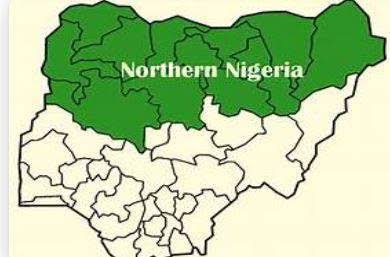
The Fulani, also known as Fulbe or Fula, are among Africa’s largest ethnic groups, spread across more than twenty countries in West and Central Africa. In Nigeria, they live in virtually every state, although significant populations are found across the northern region.
Contrary to popular assumptions, not all Fulani are nomadic cattle herders. Many are settled farmers, teachers, civil servants, academics, entrepreneurs, military officers, judges, journalists, engineers, doctors and politicians. Others combine crop farming with livestock production, while millions have lived permanently in urban centres for generations.
Reducing the identity of an entire ethnic group to pastoralism ignores the social and economic diversity that exists within the community.
How Misconceptions Developed
Several factors have contributed to the negative perception of the Fulani.
The rise of violent clashes between farmers and herders in different parts of Nigeria has generated widespread fear. As criminal groups increasingly exploit these conflicts, public narratives often fail to distinguish between legitimate pastoralists, organised criminal gangs and foreign armed elements operating across porous borders.
Media reporting has also influenced public perception. Headlines frequently identify suspects by ethnicity when crimes involve alleged Fulani herders, while the ethnicity of suspects from other groups is often omitted. Such selective framing can reinforce stereotypes and encourage collective blame.
Political rhetoric has further complicated matters. During periods of heightened insecurity, ethnic narratives have sometimes been used to mobilise public opinion, making it easier for communities to see entire groups as adversaries rather than distinguishing between law-abiding citizens and criminals.
Social media has amplified misinformation. Images from unrelated conflicts in other countries have repeatedly circulated online as evidence of attacks in Nigeria, increasing mistrust and ethnic suspicion.
The Danger of Collective Blame
Every ethnic group in Nigeria has individuals who commit crimes. Armed robbery, kidnapping, terrorism, cybercrime, oil theft and banditry involve people from diverse ethnic backgrounds. Yet Nigerians generally recognise that criminal actions should not define entire communities.
Applying a different standard to the Fulani undermines the principles of justice and equality before the law.
Collective blame also creates practical security challenges. When innocent citizens are treated with suspicion because of their ethnicity, trust between communities and security agencies weakens. Intelligence gathering becomes more difficult, and opportunities for peaceful conflict resolution diminish.
Historical Contributions to Nigeria
The Fulani have played significant roles in Nigeria’s political, educational and administrative history.
Across different periods, Fulani scholars contributed to the spread of Islamic education, literacy and scholarship throughout Northern Nigeria. Traditional institutions associated with Fulani leadership have preserved cultural heritage, promoted dispute resolution and supported local governance.
Successive generations of Fulani professionals have served Nigeria as judges, professors, diplomats, military officers, economists, journalists, scientists and public servants. Their contributions, like those of citizens from other ethnic groups, form part of the country’s national development.
Economic Contributions
Livestock remains one of Nigeria’s most important agricultural sectors.
Millions of Nigerians depend directly or indirectly on cattle production for employment and income. The livestock value chain includes transportation, veterinary services, leather production, dairy processing, meat distribution, hide and skin industries, livestock markets and numerous small businesses.
Many Fulani pastoralists supply cattle that sustain food markets across Nigeria. Beef production supports restaurants, food vendors, supermarkets, hotels and processing industries nationwide.
The contribution of livestock to rural livelihoods extends far beyond pastoral communities, creating employment opportunities for traders, transporters, butchers and artisans.
Contributions to Peaceful Coexistence
Despite media attention on violent conflicts, countless examples of peaceful coexistence exist across Nigeria.
In many communities, Fulani herders and farming populations have maintained mutually beneficial relationships for generations. Traditional arrangements governing grazing routes, water access and crop protection have often been managed through dialogue involving community leaders, traditional rulers and local authorities.
Intermarriages between Fulani and other ethnic groups are common in many parts of Nigeria, reflecting longstanding social integration.
Numerous Fulani organisations have also participated in peacebuilding initiatives, encouraging dialogue between farmers and herders and promoting lawful conflict resolution.
These positive stories rarely receive the same public attention as violent incidents.
Addressing Legitimate Security Concerns
Recognising misconceptions should not minimise the suffering of victims affected by farmer-herder conflicts or other forms of insecurity.
Thousands of Nigerians from different ethnic backgrounds have lost lives, homes and livelihoods due to violence involving armed groups.
Government has a responsibility to investigate crimes thoroughly, prosecute offenders regardless of ethnicity and strengthen border security to reduce the movement of illegal weapons and transnational criminal networks.
Improving livestock management, expanding ranching where appropriate, investing in grazing reserves where legally accepted, modernising animal husbandry and strengthening conflict mediation mechanisms can reduce tensions between farming and pastoral communities.
Justice for victims and accountability for offenders remain essential components of lasting peace.
The Role of Responsible Journalism
The media occupies a critical position in shaping public opinion.
Responsible journalism requires careful verification of facts before attributing crimes to specific ethnic groups. Reporters should avoid sensational language capable of inflaming tensions and instead provide context that distinguishes criminal actors from entire communities.
Balanced reporting also means highlighting positive examples of cooperation between ethnic groups alongside coverage of conflicts.
When journalism promotes accuracy over stereotypes, it contributes to national unity rather than division.
Building a More Inclusive Nigeria
Nigeria’s diversity should remain a source of strength rather than suspicion.
History demonstrates that no ethnic group is defined solely by the actions of its worst members. Every community contains individuals who contribute positively to society and others who violate the law.
National unity depends on citizens judging one another by character, conduct and respect for the law—not by ethnicity.
Promoting intercultural dialogue, expanding educational opportunities, strengthening community policing and encouraging responsible political leadership can reduce ethnic mistrust.
Conclusion
The Fulani, like every other ethnic group in Nigeria, cannot be viewed through a single narrative. While insecurity involving some criminal elements has created understandable public concern, fairness demands that responsibility be placed on individuals rather than entire communities.
A secure and united Nigeria will not emerge from stereotypes or collective blame. It will be built through justice, equal citizenship, accountable governance, responsible journalism and a shared commitment to peaceful coexistence.
As Nigeria continues to confront complex security and development challenges, citizens must resist narratives that divide communities along ethnic lines. The nation’s future depends not on the triumph of one ethnic group over another, but on the willingness of all Nigerians to recognise their shared humanity, uphold the rule of law and work together for peace, stability and sustainable development.