‘How Dangote will end importation of ‘Tokunbo’ cars in Nigeria’
Desert Herald
- 10/02/2019
- 0
- 12
- 14 minutes read

Some members of the consortium that made the bid, including Kaduna State Government (KDSG), Dangote Industries Limited (DIL) and PSA Groupe, incorporated DPAN and took a decision to build a plant in Kaduna State for the assembly of Peugeot brand of vehicles.
The PSA Groupe is a French multinational manufacturer of automobiles sold under the Peugeot, Citroën, DS, Opel and Vauxhall brands. Peugeot is the largest PSA brand worldwide.
Regarding the Nigerian made car, DPAN’s objective is to have vehicle assembly operations with increasing local content incorporation.
In the second stage, the assembly plant will start with car body unpainted, while at the CKD stage, all materials will be supplied loose for final welding and final assembly.
With this transition, we are going to gradually source vehicle components from local auxiliary companies.
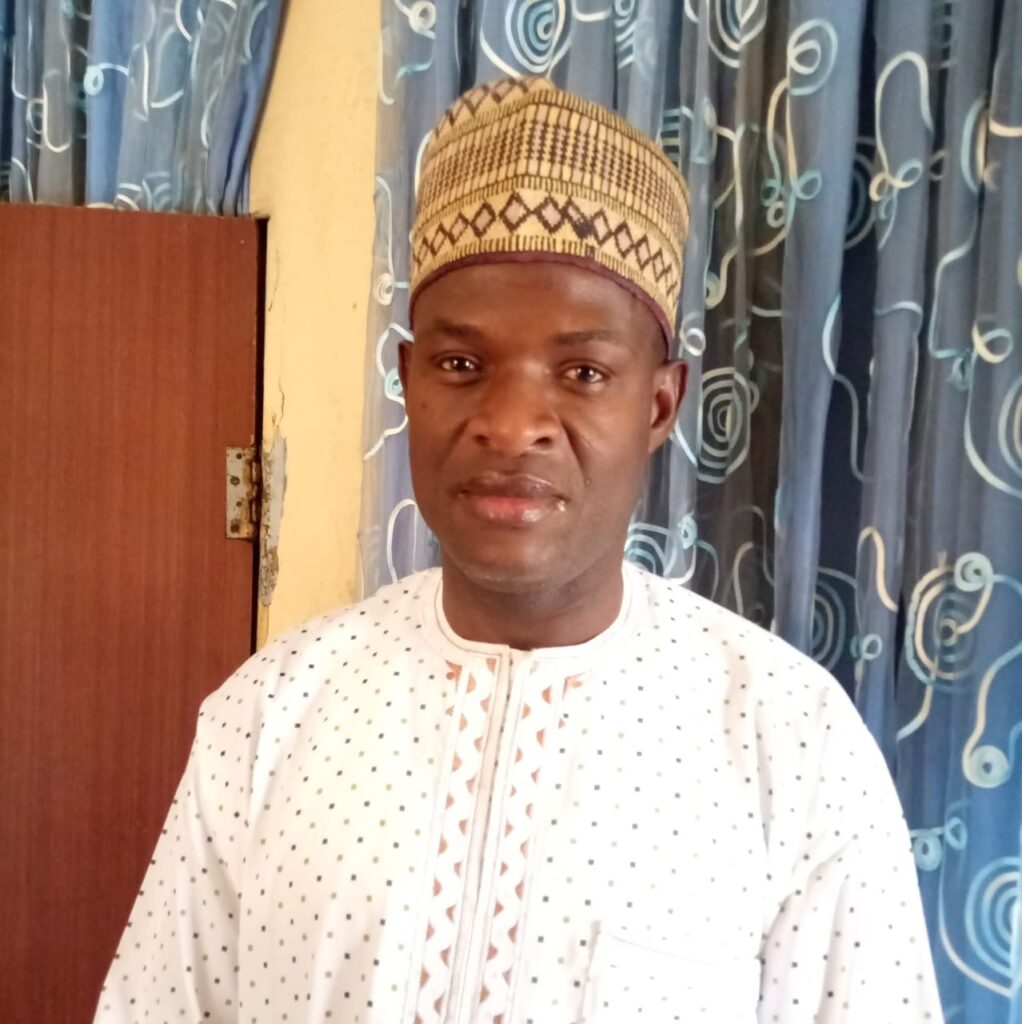
DPAN MD: The new Peugeot brand of cars has achieved the highest local content development amongst all other vehicles manufactured in Nigeria.
We are aware that even at its peak production in 1981, was producing at about 40 percent below installed capacity of about 250 vehicles assembly a day, now your offshoot has just achieved 30 vehicles daily assembly, what is your projection for this new operation?
From available records, PAN assembly plant’s maximum installed production capacity in 1981 was 60,000 cars per annum. DPAN’s new assembly plant is projected to start at an average of 15 cars per day. It will increase to 40 cars per day over a period of 3three to four years.
Our plans are to initially have a 120 cars per day maximum capacity in shifts with a room for expansion based on demand.
The ERGP builds on existing sectoral strategies and plans such as the NIRP, and the Nigeria Integrated Infrastructure Master Plan.
Rather than re-inventing the wheel, the ERGP will strengthen the successful components of these previous strategies and plans while addressing challenges observed in their implementation.
Some strategic priorities DPAN will key into include the development of Industrial skills to link many youths who are unable to find jobs with companies that have jobs, but cannot find people with requisite skills.
There is, therefore, a gap in skills development and industry needs providing training without the opportunity (or jobs) to practice makes skills acquired obsolete.
Beyond skills acquisition, opportunities must therefore be created to gain experience. DPAN will provide both job opportunities and in collaboration with Automobile Peugeot, France will have an extensive manpower development programmes, both local and international.
Also, we will work towards filling the skills gaps by ensuring all lower skilled and mid-skilled roles are immediately filled by Nigerians and establish concrete plans to staff high-skilled positions with Nigerians in our first year of operation.
We will start by employing about 80 to 100 staff and increase the number based on production increase.
We will equally promote high product quality and strong process standards, to promote Nigerian exports and provide confidence to domestic consumers, which the Peugeot brand is known to have. DPAN is going to re-emphasize on that.
DPAN MD: The government has already started implementing the National Automotive Industry Development Plan (NAIDP) that seeks to encourage local production.
Despite this initial step in revitalizing Nigeria’s automobile industry, a lot still needs to be done if the country must develop a robust automotive industry and also end the importation of used cars in the next two to three decades. What we hope to see is the generation of local used cars “Tokumbos” from the new ones being manufactured in the country.
To realize this objective, government needs to ensure policy consistency in the auto industry, which is long-term in nature.
Those that started the industry over 100 years ago are still in production. For instance, Daimler-Benz, Peugeot, Ford, GM, etc.
Accordingly, the National Automotive Industry Development plan (NAIDP) should also be long term, consistent and reviewed periodically to give additional comfort to investors.
Again, the Peugeot brand must enjoy government patronage and its agencies due to its high quality, ruggedness and ease of maintenance.
Patronage of locally produced vehicles by the government is a strong signal of confidence in the industry. It also shows government is serious about job and wealth creation and technological development.
In addition, government must check smuggling. Cars are the most smuggled goods, after food (particularly rice) in Nigeria
Government through the Nigerian Customs Service and other relevant organizations must intensify efforts to control smuggling and importation of new cars through the grey market.
Grey market imports are thought to account for a large portion of new vehicle sales in the country.
Imports through the grey market are done to reduce or avoid duty payments by declaring false information. Grey market cars tend to be cheaper and will compete against locally assembled cars on price.
Further discourage the importation of new cars by raising the bar higher against those who will rather import to Nigeria than assemble locally.
Restrict the influx of substandard new vehicles that are unsafe into Nigeria.
Unchecked smuggling activities could frustrate local assemblers and slowly wipe out any progress gained in the industry.
The provision of adequate logistics and industrial infrastructure will reduce production costs and attract investment.
Poor logistics infrastructure contributes to the difficulties faced by automakers in managing the robust supply chain needed to produce vehicles on a large scale.
Therefore, continuous modernization of the ports and customs administration will help the auto industry get needed parts on time to keep production at an optimal level.
Nigeria has a higher cargo dwell times as compared to other counties in sub-Saharan Africa.
Other measures government has to adopt includes adoption of fiscal measures, in terms of incentives and support measures required by the industry to create an environment to support existing assembly plants and attract others.
With the implementation of the National Automotive Industry Development Plan (NAIDP), which seeks to discourage vehicle importation and encourage local production, Nigeria has the potential to become the hub of Africa’s automotive industry.
Industry experts believe with Nigeria’s estimated 170 million people, of which over 40 million are in the growing middle class and that Nigeria is increasingly seen as an attractive destination for investors across all sectors, Nigeria’s potential annual new car market could be as high as one million by 2040 (out of which about 60% will be locally manufactured cars). However, it currently sits at about 60,000 in a used vehicle dominated market.
Dangote Peugeot Automobile (DPAN) has a local content policy in vehicle manufacturing.
In the early years of our production, we will basically focus on SKD assembly. It is expected that most component parts will be imported, while a few will be sourced locally.
However, over time and as we graduate from SKDI to SKD II, and eventually to CKD, more parts will be sourced locally as Nigerian suppliers develop key competencies.
The following vehicle parts shall be our first target: exhaust system, seat frames, seat foam, wiring harness, batteries, trafficators, tyres, tubes, fan blades, radiators, radiator grills, air conditioning condensers, cables, brake pads/linings, Filters, oil seals, hoses, windscreens, side glasses, fibre-glass parts, paints and many more.
Policies and programmes the government needs to implement to attract investment in local content in the auto industry include adequate protection and patronage; protection and incentives to local automobile manufacturers; emphasize more on patronage of local industries; enforce a buy-made-in-Nigeria products policy among all tiers of the government, which will translate to increased production activities and job creation for Nigerians.
We also want government to tighten the borders against smuggling and grey imports and encourage the setting up of auxiliary industries.
The progression from basic SKD assembly to CKD or manufacturing is highly dependent on growth of auxiliary industries and supporting infrastructure such as electricity.
Government can encourage the growth of companies with products and services supporting auto assembly (batteries, tyres, glazing etc.), which will improve the local content sub-sector of the Industry.
Again, government should build human capital by providing the manpower needed to fill operational roles which require in-depth technical expertise.
For the country to truly fulfil it’s potential of becoming an auto hub there is an urgent need to develop and build local technical expertise in the auto industry.
Establishment of world class Auto Skills centers within Nigeria in partnership with international technical skills institutions and make inputs into the curriculum for engineering in tertiary institutions.
DPAN MD: The tyre manufacturing companies and many others closed due to high cost of production, mostly as a result of the absence of reliable power. Diesel, Petrol, low pour fuel oil (LPFO) and kerosene were scarce and expensive and power generation in Nigeria was at a very low level. Other factors that have compounded the situation were lack of government favourable incentives and patronage.
Government MDAs are still patronizing the Peugeot brand, and we are optimistic government will soon revert to that situation.
DPAN will market brand new Peugeot vehicles to the entire public via a special scheme that will entail banks offering to finance these vehicles at lower Interest rates than are available ordinarily.
DPAN will set up a Consumer Products Unit, in its commercial division to directly develop and manage consumer products and drive sales through the Peugeot network of distributors in partnership with banks.
PAN has survived through all the hardships, due to the continued patronage of the brand by Nigerians, because the model of cars have always been designed and built to meet both the professional and lifestyle requirements of the African continent’s markets, particularly in Nigeria.
The only return I am proud to announce is the return of the brand to the light commercial vehicles segment where it held dominance decades ago with the birth of a new Peugeot pick-up, which has come to fill the void left by the long absence of the lion brand in that segment.
The all new Peugeot Pick-up will be launched in Nigeria very soon. It will have the flexible combination of professional and family activities, and is easy to use and maintain just like its parent, the 504 pick-up that dominated the market with the brand’s typical ruggedness and low running cost.
Users in Nigeria will be glad to discover the new Peugeot pick-up fulfils the fundamental needs for robustness, endurance and 4×4 drive-train demands, coupled with 21st Century features and facilities.
The new Peugeot Pick-up would considerably accelerate the efforts being made to see the brand reclaim its number one spot in the Nigerian market.