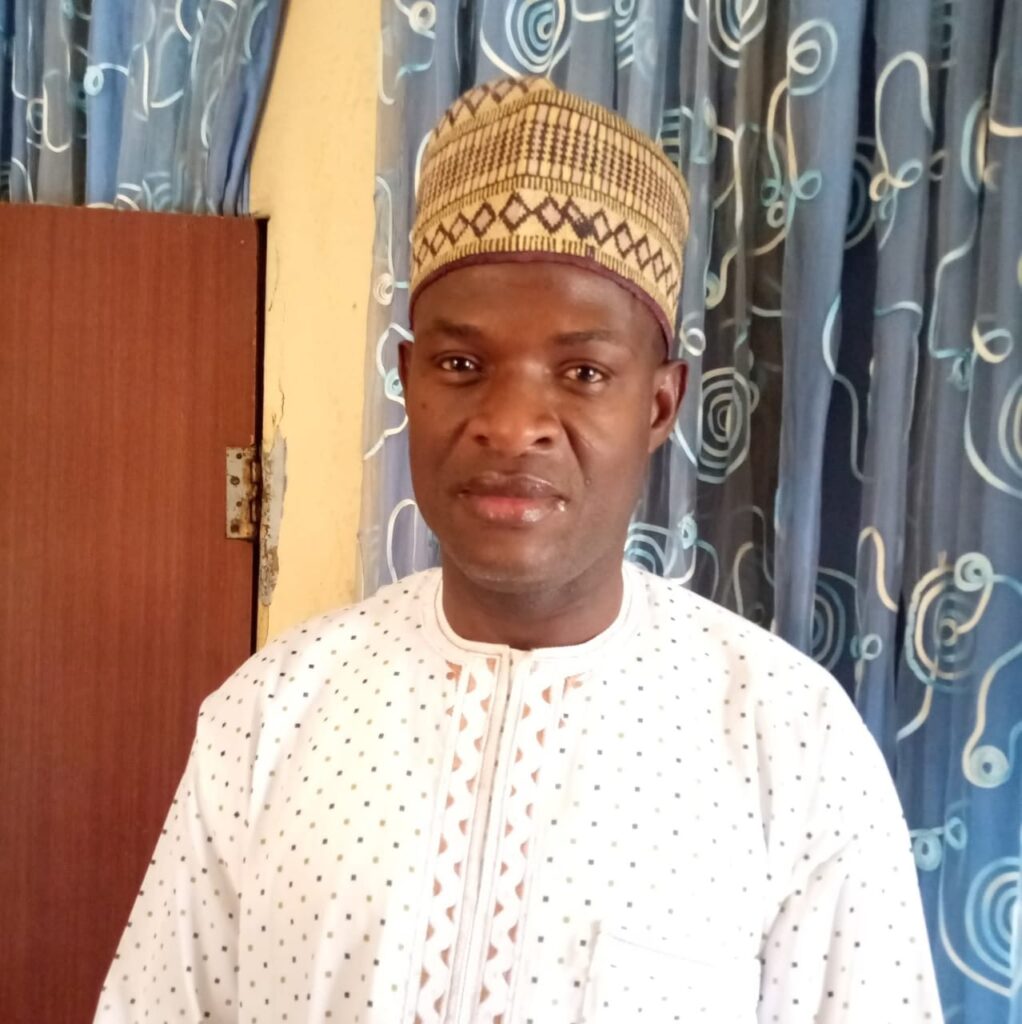
In 1999 we got only N13,000 salary, no allowance as NASS members – 80-year-old Senator Matori
Mubarak Tinja
- 0
- 11 minutes read

80-year-old Senator Salisu Matori, who represented Bauchi South Constituency, Bauchi State in the Senate between 1999 and 2003, speaks to ARMSTRONG BAKAM about his life experiences and the picture of his dream Nigeria
Where and when were you born?
I was born in Bauchi on April 22, 1941.
How did you know your birth date?
My uncle, Mahmud Tukur, was literate at that time; so he recorded the dates of important happenings in the family. He told me when I was born.
Who were you parents?
My father was Mallam Ibrahim who was a renowned Islamic scholar in Bauchi. He was also a businessman, a man of high integrity respected in society at that time. My mother, Hafsat, was a granddaughter of the Matori of Bauchi.
How was your childhood like?
Well, the story of my childhood is the same as that of other people of my age all over. It is always the beautiful memories that linger on. It was a very peaceful era when you feared nothing and you left your doors open and slept without any thought or fear that anybody was going to attack you. There was no problem because you could walk from one village to another. You could travel at night and the only things you feared were hyenas and other wild animals. But today, you on’t fear hyenas;,
what you fear are human beings, which is very unfortunate.
Which schools did you attend?
I had my primary school education in Bauchi. In 1962, I did Diploma in Business Administration and I got professional certification from the U.A.C. Training School, Lagos and the London School of Careers, England. I worked at various places. I was Director, Nigeria Asbestos Industry Limited from 1980 to 1983; I was a member of the Governing Council, Federal Polytechnic, Akure, Ondo State from 1980 to 1982; I was also Director, Nigeria Machine Tools, Osogbo, Osun State from 1984 to 1986. I worked in so many other places before going to the National Assembly where I was in the upper chamber for eight years, between 1999 and 2003.
What were the experiences you garnered in the various places where you worked?
I had very interesting experiences. For instance, in the National Assembly, as far as we were concerned, particularly in the Senate, our main drive was the love for Nigeria or what we could contribute to bring development to Nigeria and Nigerians. In other words, the main focus of each and every one of us at that time wa, to the best of my knowledge, ‘Nigeria first’ and not any other consideration. For example, when you look at the benefits aspects of it, when we came in, our salary was just N13,000 per month and we did not get any other allowances, apart from allowances for particular items. But that did not discourage us from giving our best to Nigerians. On the other hand, the electorate, their expectations and urge for material things were less than what we have today. You see, our society has become more or less polarised today by the quest for acquisition of material things and this is very unfortunate.
When did you retire and what do you do in retirement?
Well, the question of retirement in Nigeria is an on-and-off thing because even when you retire, you will still be useful to your society – local government, state and by extension, Nigeria at large – by serving in various boards and advisory committees, and so on. I was a member of the Nigeria Vision 2010 and apart from that, I served in several other committees that were set up with the hope of finding solutions to the myriads of problems confronting us in our country. But I am currently a farmer.
What do you plant and are you still able to go to farm with the insecurity all over?
Yes, of course, I still go to farm and my farm is one of the biggest in Bauchi State today. It is along the Bauchi-Gombe Road in a village called Kangere. I plant rice, maize, soya beans and white beans. These are the major crops that I plant.
How did you meet your wife?
(Laughs) I think this question should be directed to her rather than to me, but all the same, there were so many times, in our localities here, when you meet girls at occasions, not necessarily with the sole intent of getting them to marry you or something. There are such occasions like graduation from Quranic schools, marriages and so on where you meet a girl or she meets you and all that. So, that was how it all started, then, we got married.
What professions are your children into?
They are in different disciplines. There are some who are political scientists, some are business administration graduates; my two children that died were also in different disciplines. The women are all graduates also; two graduated from the ABU (Ahmadu Bello University, Zaria, Kaduna State); there is one studying at the University of Maiduguri. They all attended Queens College while the males attended Kings College in Lagos.

When and in what circumstances did you lose two of your children?
One of them died when he was barely two years old while the other one died in a fatal crash along the Bauchi-Kano Road many years ago.
The common thing is for politicians to send their children to school abroad. Why didn’t you send your own children abroad to school?
I chose not to send my children abroad for studies because I believe in Nigeria and I believe that we can make our educational system work. I believe that it is ours and it is our duty to make it work and if we don’t do it, who else will do it for us? If we send our children outside the country for whatever reason, who will fix our own system here? Nobody! We have to start from somewhere and that is why all my children schooled here and are still here, including my grandchildren.
What kind of music do you love?
(Smiles) This is very interesting. The songs of Haruna Ishola are my favourites because there is a lot of sense in them. Most of the people, who sang in that generation, sang about women, someone who was rich or that, but when you listened to Haruna Ishola’s songs, he either praised intelligence or praised people who had made sacrifices for the community, the society; rarely did he extol anyone because of the financial empire the person had built. And that is the major reason why I developed interest in him. Again, he sang melodiously.
SOURCE: PUNCH