Okonjo-Iweala Election as DG WTO, US Opposition and FG Declaration


BY OBUTE JAMES
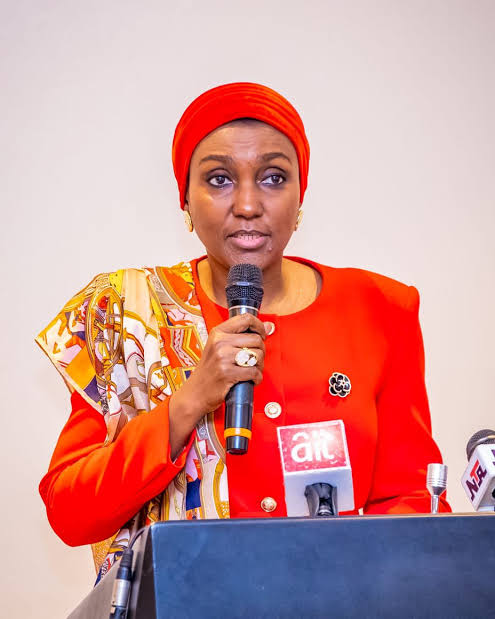
FORMER Nigerian Minister of Finance, Ngozi Okonjo-Iweala, last week won election as the Director-General of the World Trade Organization, WTO.
Iweala emerged winner of the highly competitive race after polling 104 votes from 164 member countries to defeat her opponent, South Korea’s Trade Minister, Yoo Myung-hee.
If confirmed by consensus, Iweala will become the first female and first African to occupy the office.
Despite securing majority votes, the United States of America refused to endorse her as the consensus candidate.
In a statement by the office of the US Trade Representative, America cited lack of experience and procedural issues for its stance.
The statement reads, “The Office of the United States Trade Representative issued the following statement today on the selection of the next World Trade Organisation Director-General:
“The United States supports the selection of Korean Trade Minister Yoo Myung-hee as the next WTO Director-General. Minister Yoo is a bona fide trade expert who has distinguished herself during a 25-year career as a successful trade negotiator and trade policy maker. She has all the skills necessary to be an effective leader of the organization.
“This is a very difficult time for the WTO and international trade. There have been no multilateral tariff negotiations in 25 years, the dispute settlement system has gotten out of control, and too few members fulfill basic transparency obligations.
“The WTO is badly in need of major reform. It must be led by someone with real, hands-on experience in the field.”
However, the Federal Government of Nigeria said there is no going back on its determination to ensure Ngozi Okonjo-Iweala is declared as the DG of WTO.
In a statement last Thursday, Ministry of Foreign Affairs spokesperson, Ferdinand Nwonye, said Nigeria will continue to engage relevant stakeholders.
He said the country will see that the lofty aspiration of her candidate to lead the WTO is realised.
The government also made reference to the endorsement of the former Finance Minister by the majority of the WTO members.
“The candidate from Nigeria, Dr Ngozi Okonjo-Iweala has secured the support of the majority of the member countries but is yet to be declared and returned the winner. This is because apart from winning the election, all the 164 Member States of WTO were expected to adopt the winner by consensus, in accordance with the rule of procedure of the WTO”, the statements read.
The official stressed that it is important to highlight that Dr Okonjo-Iweala “has secured cross-regional backing with only the United States opposing the consensus.”
A meeting of the General Council of the WTO has been scheduled for November 9, 2020, for the final decision on the election process.
The World Trade Organization (WTO) is an intergovernmental organization which regulates international trade. The WTO officially commenced on 1 January, 1995 under the Marrakesh Agreement, signed by 123 nations on 15 April, 1994, replacing the General Agreement on Tariffs and Trade (GATT), which commenced in 1948.
The WTO deals with regulation of trade in goods, services and intellectual property between participating countries by providing a framework for negotiating trade agreements and a dispute resolution process aimed at enforcing participants’ adherence to WTO agreements, which are signed by representatives of member governments and ratified by their parliaments.
The WTO prohibits discrimination between trading partners, but provides exceptions for environmental protection, national security, and other important goals.
Trade-related disputes are resolved by independent judges at the WTO through a dispute resolution process.
A trade facilitation agreement, part of the Bali Package of decisions, was agreed by all members on 7 December, 2013, the first comprehensive agreement in the organization’s history.
On 23 January, 2017, the amendment to the WTO Trade Related Aspects of Intellectual Property Rights (TRIPS) Agreement marks the first time since the organization opened in 1995 that WTO accords have been amended, and this change should secure for developing countries a legal pathway to access affordable remedies under WTO rules.
It observed that WTO boosted trade and barriers to trade would be higher in the absence of the WTO.
The WTO has highly influenced the text of trade agreements, as “nearly all recent [preferential trade agreements (PTAs)] reference the WTO explicitly, often dozens of times across multiple chapters… in many of these same PTAs we find that substantial portions of treaty language—sometime the majority of a chapter—is copied verbatim from a WTO agreement.”
The United Nations Sustainable Development Goal 10 also referenced WTO agreements as instruments of reducing inequality.
The past DG of WTO include Peter Sutherland Ireland, 1995; Renato Ruggiero, Italy 1995–1999; Mike Moor, New Zealand 1999–2002; Supachai Panitchpakdi, Thailand 2002–2005; Pascal Lamy, France 2005–2009 and 2009–2013; Roberto Azevêdo; Brazil 2013–2017 and 2017–2020.