THE ROUGH ROAD TO THE SENATE: BALA MOHAMMED’S 2027 POLITICAL TEST

By Umar U. Duguri
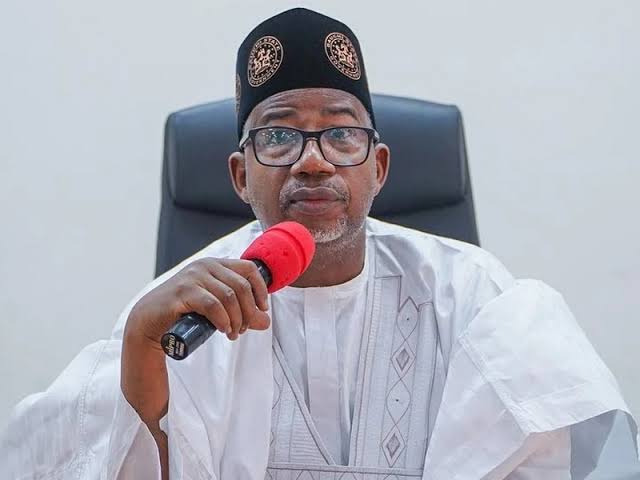
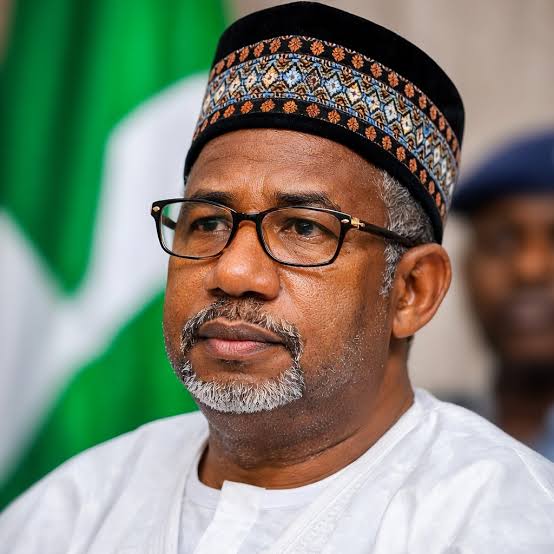
Governor Bala Abdulkadir Mohammed’s reported ambition to return to the National Assembly in 2027 is shaping up as one of the most consequential political contests likely to emerge from Bauchi State.
After eight years in Government House, Mohammed is seeking a return to the Senate, where he previously represented Bauchi South before his appointment as Minister of the Federal Capital Territory.
On the surface, the transition from governor to senator may appear natural.
In practice, it could be considerably more complicated.
Mohammed’s challenge is not simply to secure another political office. He must translate eight years of executive visibility, political relationships and statewide influence into a fresh mandate from voters in one senatorial district.
That distinction could define the contest.
FROM GOVERNMENT HOUSE TO THE SENATE
Mohammed enters the potential contest with an unusually extensive political résumé.
He has served as senator, minister and governor, giving him experience across both the legislative and executive branches of government.
His supporters are likely to place that experience at the centre of their argument, contending that a return to the Senate would give Bauchi South a representative with established knowledge of government and relationships within the federal political establishment.
But experience alone does not determine electoral outcomes.
A Senate election is fundamentally different from a governorship election. The governor will no longer be seeking a statewide mandate but the support of voters within Bauchi South Senatorial District.
The political calculation must therefore shift from statewide governance to constituency politics.
THE ELECTORAL RECORD THAT CANNOT BE IGNORED
Perhaps one of the most important questions surrounding Mohammed’s Senate ambition is whether his political influence as governor has translated into corresponding strength for his party in federal legislative elections within Bauchi South.
The record of the two general-election cycles conducted during his tenure offers an important point of reference.
In the 2019 Bauchi South senatorial election, the APC won the seat with 250,725 votes, while the PDP candidate polled 175,527 votes.
Four years later, in 2023, the Bauchi South Senate seat again went to the APC, with Shehu Buba Umar emerging victorious.
In other words, the PDP did not secure the Bauchi South Senate seat in either of the two general-election cycles during Mohammed’s tenure as governor.
The pattern was not confined to the Senate.
In the Alkaleri/Kirfi Federal Constituency, which forms part of Bauchi South, the APC also won the House of Representatives seat in both 2019 and 2023.
These results do not by themselves determine what will happen in 2027. Elections are contests fought under different circumstances, with different candidates, alliances and political environments.
But they provide an important historical benchmark.
They demonstrate that gubernatorial control of Bauchi State does not automatically translate into control of every federal legislative seat within the governor’s political territory.
For Mohammed, that history could make the 2027 Senate race a test not only of personal popularity, but also of whether his political network can successfully operate at constituency level.
THE SEVEN-LGA QUESTION
Bauchi South comprises Alkaleri, Bauchi, Bogoro, Dass, Kirfi, Tafawa Balewa and Toro local government areas.
Each has its own political networks, influential community leaders, local interests and electoral history.
As governor, Mohammed has been able to operate across the entire state.
As a senatorial candidate, however, he would need to build a winning coalition across seven distinct local-government political environments.
That makes grassroots mobilisation, local alliances, community relationships and voter perceptions of his record particularly important.
The central question is straightforward:
Can the political capital accumulated during eight years at Government House be converted into a constituency-level mandate?
THE SUCCESSION FACTOR
Mohammed’s Senate ambition cannot easily be separated from the 2027 governorship succession battle.
The governor’s political camp has backed a successor, creating a broader contest over whether his political structure will remain influential after he leaves Government House.
For Mohammed, the outcome of that succession struggle could have consequences beyond the governorship.
A successful political transition could strengthen the structure associated with his administration.
A fragmented transition could, conversely, create competing centres of influence before the Senate contest reaches its decisive stage.
This is why the 2027 governorship and Senate contests should not necessarily be viewed as completely separate political events.
The alliances formed around the governorship could influence the Senate race, while the Senate contest could also become part of the broader struggle over political influence after 2027.
THE PARTY PLATFORM
Another major variable is the platform under which Mohammed is seeking the Senate.
Having previously contested major elections under the Peoples Democratic Party, he is now associated with a bid under the Allied Peoples Movement.
That creates a clear distinction between personal political capital and party infrastructure.
Mohammed possesses substantial name recognition.
The more difficult question is whether that recognition can be supported by an electoral organisation capable of reaching voters across all seven local government areas of Bauchi South.
The electoral history of the constituency makes this question particularly significant.
The PDP’s inability to win the Bauchi South Senate seat during the 2019 and 2023 election cycles demonstrates that a governor’s statewide political influence cannot automatically be equated with senatorial electoral strength.
A new party platform would therefore have to demonstrate that it can provide the organisational machinery required to convert Mohammed’s personal following into votes.
Modern elections require more than name recognition.
They require polling-unit structures, agents, mobilisation networks, communications, voter engagement, fundraising and effective election-day coordination.
The strength of that machinery will be one of the practical tests facing the campaign.
THE LEGACY QUESTION
Eight years in office inevitably produce a record that can be examined from different perspectives.
Mohammed’s supporters point to infrastructure, urban renewal, education, healthcare, roads and other government interventions as evidence of his administration’s impact.
Critics, meanwhile, are likely to scrutinise the same period through questions concerning public expenditure, governance priorities, political appointments, development outcomes and the wider socioeconomic condition of the state.
The Senate election could therefore become, in part, a contest over competing interpretations of Mohammed’s gubernatorial legacy.
That does not mean every voter will approach the election in the same way.
Some may prioritise experience and continuity.
Others may prioritise fresh representation.
Still others may base their decision primarily on local issues, community relationships or the individual candidates.
That diversity of voter considerations is precisely what makes a senatorial contest different from a statewide governorship election.
THE FORMER-GOVERNOR TEST
There is another historical factor that deserves attention.
Political influence accumulated inside Government House does not automatically transfer to another electoral contest after an incumbent leaves office.
The 2019 and 2023 federal-election results in Bauchi South provide a useful illustration.
During Mohammed’s tenure as governor, his party did not win the Bauchi South Senate seat in either cycle. The APC also retained or captured the Alkaleri/Kirfi House of Representatives seat across the two election cycles.
That does not mean the same results will be repeated in 2027.
But it does establish that federal legislative contests within Bauchi South have their own political dynamics.
Mohammed will therefore have to convince voters not merely that he has governed Bauchi State, but that his return to the Senate would directly advance the interests of Bauchi South.
THE ZONING DIMENSION
The politics of zoning could add another layer of complexity.
The governorship of Bauchi State has historically been dominated by candidates from the Southern Senatorial District since the return to democratic rule in 1999.
As the 2027 succession debate intensifies, arguments over rotation and geographical balance are likely to remain part of the political conversation.
Mohammed’s Senate ambition could consequently become intertwined with a larger debate over who should exercise political leadership in Bauchi after 2027.
Whether voters treat these questions separately or as part of one broader political calculation remains an open question.
WHAT MOHAMMED BRINGS TO THE CONTEST
Despite the challenges, Mohammed enters the potential contest with significant political assets.
His name is already well established.
His previous Senate experience gives him familiarity with the institution.
His eight years as governor have provided statewide visibility and an extensive political network.
He has also contested and won major elections in Bauchi.
These are tangible political assets.
But they are not guarantees of a Senate victory.
The central task will be converting recognition, experience and political networks into sufficient support across the seven-LGA constituency.
WHAT HIS OPPONENTS ARE LIKELY TO TARGET
Opponents are likely to focus their campaigns on several areas.
They can question aspects of the administration’s record, challenge the governor’s preferred succession arrangement, campaign for political change and argue that Bauchi South requires a different form of representation.
They may also point to the previous federal-election performance of Mohammed’s party as evidence that statewide executive influence does not automatically guarantee a senatorial victory.
For Mohammed, the response will require more than defending his gubernatorial record.
He will need to articulate a clear and convincing legislative agenda for Bauchi South.
What exactly does he intend to accomplish in the Senate?
What federal projects and policies would he prioritise?
How would his previous experience in government translate into measurable benefits for the constituency?
Those questions could become central to the campaign.
THE SENATE QUESTION
Ultimately, the most important issue may be the question of representation.
Will Mohammed prioritise federal infrastructure for Bauchi South?
Will he focus on employment, education, healthcare and agricultural development?
Will his experience in the executive branch enable him to attract greater federal attention to constituency needs?
Or will voters interpret the campaign principally through the broader question of political succession and influence after Government House?
How those competing narratives develop could significantly shape the political conversation.
WHAT COULD DECIDE THE RACE
Several factors could become particularly important as the election approaches:
1. Grassroots organisation: The ability of each campaign to build effective structures across the seven LGAs.
2. Local alliances: Relationships with traditional, community and political actors across the constituency.
3. Party machinery: The capacity of the candidate’s political platform to organise agents, mobilisation and election-day operations.
4. Gubernatorial legacy: How voters assess Mohammed’s eight-year record in office.
5. Constituency agenda: The clarity and credibility of the candidate’s programme for Bauchi South.
6. Succession politics: Whether the governorship transition strengthens or fragments Mohammed’s wider political structure.
7. Candidate relationships: The extent to which voters identify with individual candidates beyond party affiliation.
8. Electoral history: Whether the voting patterns witnessed in previous federal elections persist or change substantially in 2027.
THE ROAD AHEAD
The 2027 Senate race is therefore unlikely to be a simple continuation of Mohammed’s governorship.
It is a new electoral contest involving different voters, different expectations and different political calculations.
Mohammed’s political experience, visibility and established network give him substantial assets.
At the same time, the change of political platform, the succession battle, zoning considerations, local alliances and the electoral history of Bauchi South introduce a series of variables that cannot be ignored.
Most importantly, the record of the two election cycles conducted during his tenure demonstrates that gubernatorial influence has not automatically translated into federal legislative victories for his party in Bauchi South.
That history does not decide the 2027 contest.
But it does provide a warning against assuming that the transition from Government House to the Senate will be automatic.
The ultimate test will be whether Mohammed can persuade voters across Bauchi South that his experience, record and proposed return to the National Assembly offer sufficient value to earn another mandate.
For his opponents, the challenge will be to present a credible alternative capable of attracting voters across the same seven-LGA constituency.
For the electorate, the decision will ultimately rest on the candidates, their records, their programmes, their alliances and the interests voters believe should guide Bauchi South’s representation from 2027.
The road to the Senate remains open, but it is unlikely to be a straightforward one.
In 2027, Bala Mohammed will not simply be asking voters for another political mandate.
He will be asking Bauchi South to determine whether the political capital accumulated during eight years in Government House should continue beyond the governorship and into the National Assembly.
That is the real political test—and the road from Government House back to the Senate may prove considerably more complicated than the journey from the Senate to Government House.